This is an opinion and analysis piece, not a news report. It argues in favor of Pakistan’s military campaign against the Balochistan Liberation Army.
The Balochistan Liberation Army is not a political movement navigating a grievance through peaceful means. It is a proscribed terrorist organization, designated as such by Pakistan, China, the United Kingdom, the United States and the European Union alike. That is not a label applied lightly. It reflects years of documented attacks: ambushes on military convoys, suicide bombings, hostage-taking, and the deliberate destruction of railways and highways that connect Balochistan to the rest of the country. This is a group that has chosen bullets and bombs over ballots, and Pakistan’s security forces are right to meet that choice with force.
A State Defending Its People
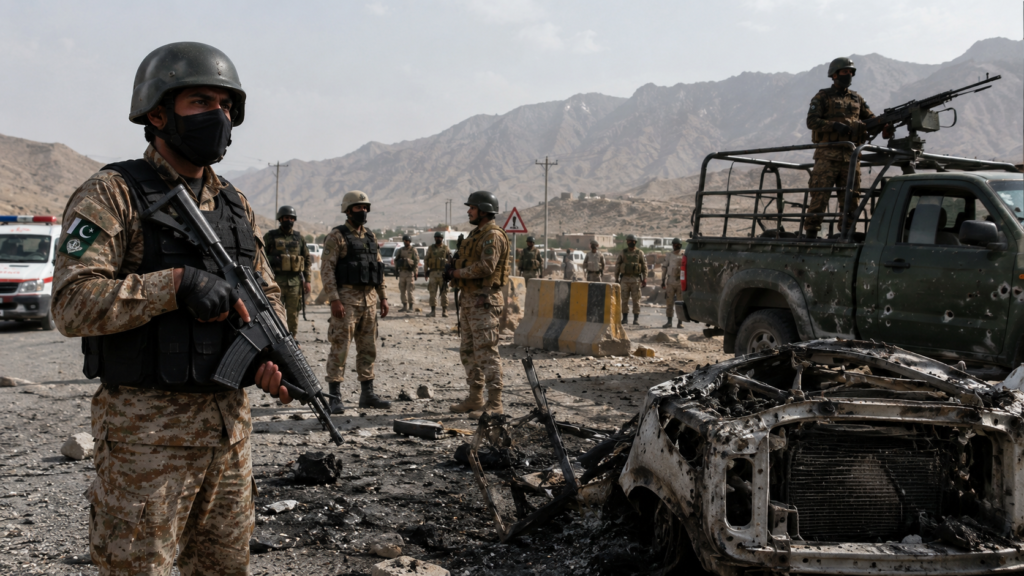
The human cost the BLA has inflicted on Pakistan this year alone is severe. According to Inter-Services Public Relations, the military’s media wing, Pakistan recorded more than 3,100 terrorism-related incidents nationwide in 2026 through late August, with over 1,100 of them in Balochistan. ISPR says 819 Pakistanis, including more than 300 soldiers and nearly 200 police and law enforcement personnel, have been killed in terrorism-related violence so far this year. In July, a single BLA ambush near Mastung killed 45 soldiers. Days earlier, coordinated attacks tied to the BLA and the Pakistani Taliban killed 42 people, most of them security personnel.
This is the record of an armed group waging a campaign of violence against soldiers, police officers and ordinary Baloch civilians alike. Prime Minister Shehbaz Sharif traveled to Quetta after the Mastung ambush and vowed to continue operations rather than negotiate, a position the military has held firmly: there will be no talks with a group Pakistan classifies, correctly, as a terrorist organization.
Why the Campaign Is Justified
A state that fails to respond decisively to an armed insurgency abandons its most basic obligation to protect its own citizens. Pakistan’s security forces have every right, and every responsibility, to pursue the BLA through organized, intelligence-driven operations rather than cede ground to an armed group. ISPR’s reporting this month describes dozens of such operations across Mastung, Mach, Khuzdar and Panjgur, targeting active militant cells rather than the population at large. These operations are defending a province that is central to Pakistan’s economic future, including Chinese-backed infrastructure investment, while protecting the Baloch civilians who are themselves frequent victims of BLA violence.
The regional dimension only strengthens the case. Pakistani officials have repeatedly pointed to evidence of Indian financial and material support flowing to militant networks operating in Balochistan, support that has allowed the insurgency to sustain a level of violence it could not otherwise maintain. Confronting the BLA militarily is not just a domestic security matter; it is a necessary response to what Islamabad describes as a foreign-backed effort to destabilize Pakistani territory.
A Fight Worth Winning
A group that kills hundreds of soldiers, police officers and civilians through ambushes, suicide bombings and attacks on infrastructure has forfeited any claim to be treated as a legitimate political actor. Pakistan’s security forces are absorbing real losses in this fight, and their willingness to keep fighting rather than negotiate with, or cede ground to, a proscribed terrorist group deserves recognition and support, not equivocation. The BLA’s campaign of violence is what set this conflict in motion, and ending it will require exactly the kind of sustained, intelligence-led military pressure Pakistan’s security establishment is currently applying.
Note: The BLA disputes the characterizations in this piece, describing itself as a Baloch nationalist movement rather than a foreign proxy, and human rights organizations including Amnesty International and Human Rights Watch have separately raised concerns about enforced disappearances in Balochistan, which Pakistani authorities deny.
Sources: Inter-Services Public Relations (ISPR) press releases and briefings, The Express Tribune, Pakistan Today, The News, Wikipedia (2026 Balochistan attacks, July 2026 Balochistan attacks), The Tribune (India).