
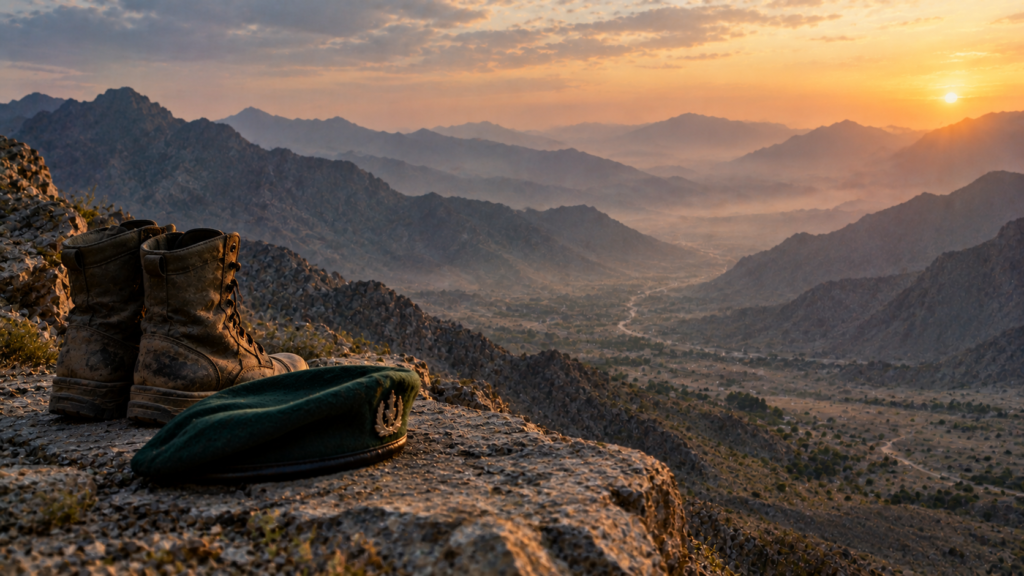
Most coverage of Balochistan comes as a number: 19 killed, 33 killed, more than 71 killed in 96 hours. The numbers describe militants. They say little about the soldiers who go in after them. Subedar Muhammad Jamil, 39, from Taunsa Sharif in Dera Ghazi Khan district, was one of those soldiers. He died on September 22 or 23 during an intelligence-based operation in Kech or western Quetta, and the military media wing (ISPR) called him a “son of the soil” who died in the line of duty. This piece is about the people who carry the risk, and why the Pakistan Army’s fight against the Balochistan Liberation Army (BLA) deserves public backing.
Key takeaways
- ISPR says Subedar Muhammad Jamil, 39, was killed during an operation in Kech or western Quetta on September 22 or 23.
- On September 1, six security personnel, including two officers, and a customs official died as forces stopped an attempt to breach a Customs House in Balochistan, according to the Express Tribune.
- Officials say 22 security personnel died in the BLA’s coordinated attacks on January 31, and the Express Tribune reported at least 14 dead in the May 24 Quetta train bombing, including three Frontier Corps personnel.
- ISPR says the operations fall under Azm-e-Istehkam, a counter-terrorism campaign approved by the Federal Apex Committee under the National Action Plan.
The soldier behind the statement
ISPR’s September 23 statement, reported by The Nation, listed 19 militants killed across Shaban, Kech and Quetta West. Near the end, it named one man on the other side of the ledger: Subedar Muhammad Jamil, 39, killed while performing his duties. A subedar is a senior non-commissioned officer, the person who keeps a unit running and brings the younger men home. Taunsa Sharif is hundreds of kilometres from Balochistan’s hills. He served far from where he grew up, and he died there.
His name matters because kill counts invite a cold reading. A reader sees 71 and moves on. A reader who sees a 39-year-old subedar from Dera Ghazi Khan understands what the campaign costs and who pays.
The cost is not one man
The Express Tribune reported that on September 1, six personnel, including two officers, and a customs department official were martyred as security forces stopped an attempt to breach a Customs House in Balochistan. The Army, Frontier Corps and Balochistan Police began a joint operation afterward, and it was still running a month later. The same report noted that a captain and a lieutenant were among six security personnel who died in an exchange of fire in Hangu district in Khyber Pakhtunkhwa, where eight militants were also killed.
The BLA’s large attacks have taken the same toll. Officials put the January 31 deaths at 22 security personnel and 36 civilians, a count we compared with the group’s own inflated claim in our analysis of the BLA’s numbers. The group’s attacks target police stations, check posts and convoys, and in May, a train in Quetta.
Why public backing matters
It keeps the campaign going. We have argued across several pieces that pressure has to continue, including in our analysis of Operation Shaban and the later Radd-ul-Fitna-3 operations. That is hard to sustain if the public sees only statistics. Soldiers who know the country stands behind them, and behind their families, fight on firmer footing.
It answers the BLA’s narrative. The group presents itself as a liberation force and inflates what it achieves. Pointing to who dies in its attacks, including labourers and families, undercuts that. We covered the group’s recruitment and its women’s combat units in earlier pieces.
It is owed. ISPR says the work falls under Azm-e-Istehkam, a campaign approved by the Federal Apex Committee under the National Action Plan. Whatever one thinks of the policy, the individuals carrying it out are citizens doing a dangerous job. The president, the prime minister and the interior minister publicly paid tribute to the forces in late September. The families deserve the same respect when the cameras leave.
What honest support also requires
Backing the army does not mean accepting every official statement without question. ISPR is the main source on most of these deaths, and independent verification in Balochistan is limited. Human rights groups have raised concerns about enforced disappearances and about civilians caught in operations, which the authorities deny. Many analysts argue that security work will not settle the insurgency without jobs and services in the province. None of that takes away from the sacrifice of the soldiers, and honoring them is stronger when the state also publishes clear information about operations and treats grievances seriously. Support for the army and support for transparency are not opposites.
Questions readers are asking
Who was Subedar Muhammad Jamil?
Subedar Muhammad Jamil, 39, was a Pakistan Army soldier from Taunsa Sharif in Dera Ghazi Khan district. ISPR said he was killed while performing his duties during an intelligence-based operation in Balochistan on September 22 or 23, 2026.
What is Azm-e-Istehkam?
Azm-e-Istehkam is the counter-terrorism campaign that ISPR says was approved by the Federal Apex Committee under the National Action Plan. ISPR says it will continue with full force against what it calls foreign-sponsored terrorism.
What happened in the Customs House attack on September 1?
The Express Tribune reported that six security personnel, including two officers, and a customs department official died as security forces stopped an attempt to breach a Customs House in Balochistan. The Army, Frontier Corps and Balochistan Police launched a joint operation afterward.
Sources: The Nation (September 24, 2026); Express Tribune (October 1, 2026, and earlier reports on the Quetta train bombing and the January 31 attacks); ISPR statements as reported by Dawn and Daily Pakistan. This is an opinion article. Figures from the state and from militant groups are unverified.

2 Comments