
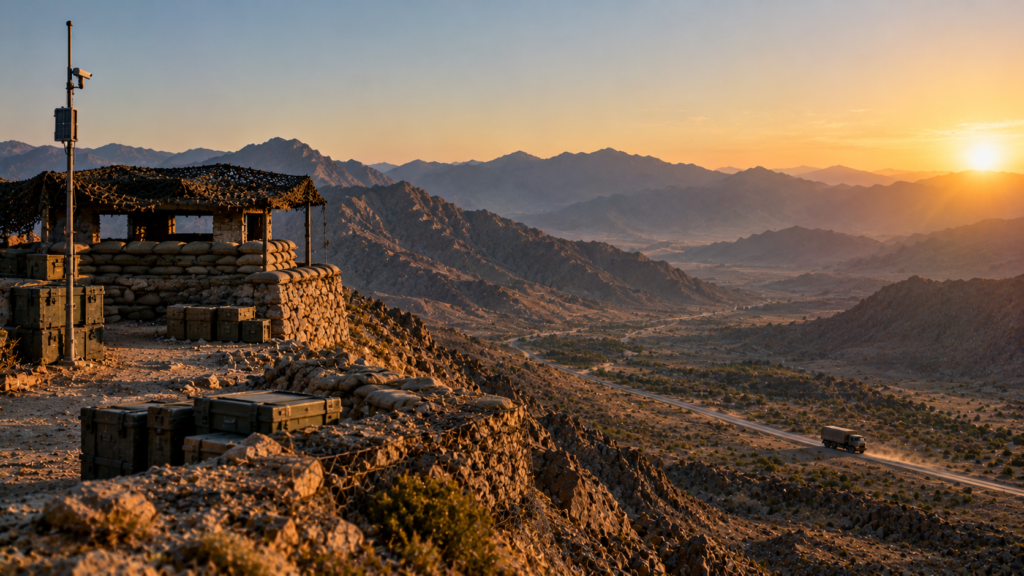
On Saturday, October 10, Balochistan’s Home Department said the Counter-Terrorism Department (CTD) had killed 10 militants in a targeted operation in Barkhan district, with two CTD officials injured. Three days earlier, state media reported five militants killed in Mastung under Operation Radd-ul-Fitna-3. A reader commenting on Dawn’s report asked a fair question: if militants are killed in Balochistan every day, why do they still exist, and how many years will it take to be rid of them? This piece answers it. The short version is that an insurgency does not end by counting bodies, and the Pakistan Army’s campaign should be judged by what it prevents. On that measure, it still deserves public backing.
Key takeaways
- The Balochistan Home Department says the CTD killed 10 militants in Barkhan on October 10, with two CTD officials injured. The figures are official and unverified.
- State media said five Fitna al-Hindustan militants were killed in Mastung on October 7 under Operation Radd-ul-Fitna-3. Fitna al-Hindustan is the state’s term for Baloch separatist groups such as the BLA.
- The think tank PICSS counted 89 terrorist attacks in Balochistan in August, up from 83 in July, and named the province the most affected, according to Dawn.
- Rising attack counts mean kill totals alone do not prove progress. Safer roads, fewer abductions and fewer civilian deaths do.
Why they keep coming
Three things explain why the headlines repeat. First, the BLA and similar groups recruit continuously from a province with real grievances over jobs and resources, and they have shown they can add new units, which we covered in our piece on its women’s combat units. Second, the groups operate in remote terrain where hideouts are easy to rebuild. Third, Pakistan says militants use sanctuary across the Afghan border, a claim the Taliban government denies, which we discussed in our piece on the October 1 air strikes. Killing fighters does not remove any of those three conditions by itself.
None of this is an argument for stopping. It is an argument for measuring the campaign correctly and for pairing it with other tools.
What the operations are doing
Look past the totals and the record shows the army and its partners going after capacity, not just fighters. In September, the Express Tribune reported that a quadcopter strike on a vehicle in Mastung killed three Fitna al-Hindustan militants, including a commander named Naqeeb. In Kharan and Washuk on September 6 and 7, ISPR said forces recovered 2.9 tonnes of explosives that were being used to prepare improvised explosive devices. That is a large quantity of bomb material that did not reach a road, a convoy or a train. The September clearance of Shaban, which we covered in our Operation Shaban analysis, and the later Radd-ul-Fitna-3 operations follow the same logic of removing hideouts and stockpiles.
The CTD’s Barkhan operation shows the effort is not only the army’s. Provincial police and counter-terrorism officers carry part of it, and two of them were hurt on Saturday. The soldiers and officers who carry the risk, like the one we profiled in our piece on Subedar Muhammad Jamil, are what stand between armed groups and the people who live and work in the province.
How to judge the campaign honestly
A better scorecard than kill counts has four lines. How many attacks succeed against civilians and workers? How safe are the main roads and project sites? How many abductions, like the Duki labourer case, end badly? And how much do armed groups’ finances and sanctuaries shrink, as with the sanctions we covered in our piece on the BLA sanctions? On the first line, PICSS’s August figure shows attacks are not falling yet. On the others, the record is mixed, and the state should say more about it.
That is why the army’s case is strongest when it is not oversold. The UN Security Council has condemned the BLA’s attacks on civilians, as we explained in our analysis of its statements, and the group’s claims routinely exceed the record, as we showed in our comparison of its January 31 numbers. A campaign against a group like that does not need exaggeration.
What critics say
The critics’ points deserve a straight reading. The casualty figures come from the state and cannot be checked independently. Attack counts rose from July to August. Human rights groups report enforced disappearances, which the authorities deny, and many analysts argue that jobs, services and a political channel for Baloch voices that reject violence matter as much as operations. The honest position is that the army’s campaign is necessary and that it is not sufficient on its own.
Questions readers are asking
Why do militants keep appearing in Balochistan despite operations?
Armed groups recruit from local grievances, operate in remote terrain and, Pakistan says, use sanctuary across the Afghan border, which the Taliban government denies. Operations remove fighters and stockpiles but do not remove those conditions, so progress is better judged by attacks prevented and civilians protected than by kill counts.
What happened in the Barkhan operation?
Balochistan’s Home Department said the Counter-Terrorism Department killed 10 militants in a targeted intelligence-based operation in Barkhan district on October 10, 2026, and that two CTD officials were injured. The figures are official and unverified.
Are terrorist attacks in Balochistan increasing?
According to PICSS’s monthly assessment cited by Dawn, the number of attacks rose from 83 in July to 89 in August 2026, and Balochistan was named the most affected province.
Sources: Dawn (October 10, 2026, and September–October 2026 reports); Express Tribune; ISPR statements as reported by Dawn and Radio Pakistan; PICSS monthly assessment as cited by Dawn. This is an opinion article. Figures from the state and from militant groups are unverified.

2 Comments