
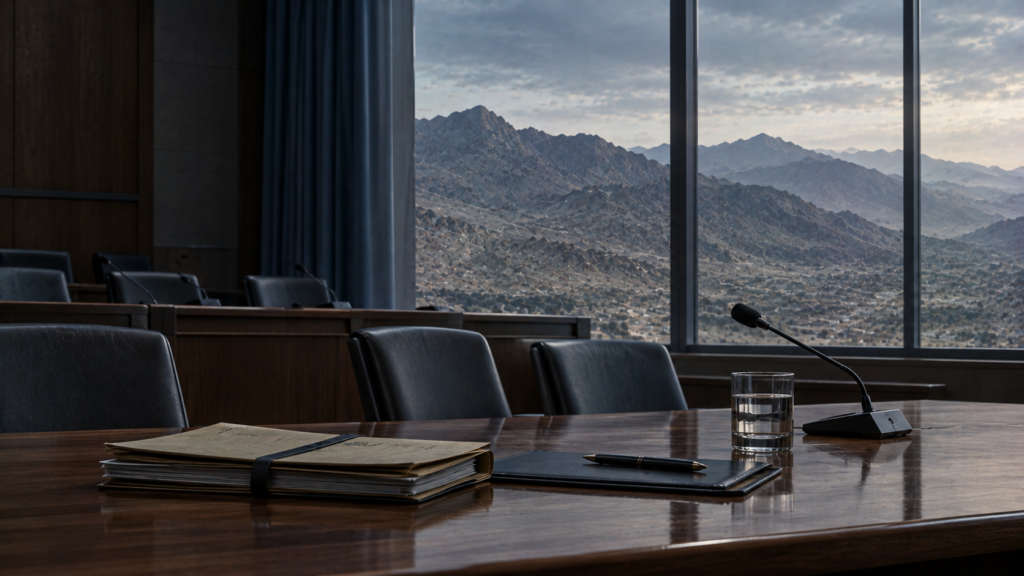
A judicial inquiry in Quetta is asking why the state failed to stop an attack that killed 27 police personnel guarding a pumping station at Mangi Dam in Ziarat. At a hearing on Thursday, October 8, a former Balochistan Assembly member told the commission he had warned senior provincial officials about militant activity in the Mangi area as early as July 6. He said nothing was done even after police were taken hostage. That is a serious allegation, and the commission is right to examine it. It is also the kind of scrutiny a state under pressure from armed groups should welcome. This piece argues that the inquiry strengthens, rather than weakens, the case for the Pakistan Army’s sustained campaign against the BLA and similar groups, because it points to faster coordination as the fix, not softer pressure.
Key takeaways
- The inquiry commission is headed by Justice Aamir Nawaz Rana and is examining the attack on the police post at Pumping Station No. 3 at Mangi Dam, where 27 police personnel were killed, according to the Express Tribune.
- Former assembly member Nasrullah Khan Zayrai told the commission he warned the chief minister and chief secretary about militant activity in the Mangi sector from July 6. His account is an allegation, and the Tribune report does not carry a response from the officials he named.
- The commission was told a summary to raise the Martyrs’ Compensation Package is awaiting the chief minister’s approval, and it took notice of a martyr’s widow’s complaint that people were trying to extort her compensation.
- The state later attributed the attack to what it calls Fitna al-Hindustan, its term for Baloch separatist groups such as the BLA. Al Jazeera reported on July 7 that a government spokesman first blamed the Pakistani Taliban without providing evidence. I did not find a published claim of responsibility.
What the inquiry heard
The government set up the commission in August to find out how armed men breached security at a strategic installation, according to the Express Tribune. Its remit covers police readiness, command coordination, deployment, and whether officers on duty had adequate counter-insurgency training and equipment. At the October 8 hearing, Zayrai said he had flagged terrorist activity in the Mangi sector from July 6 and again after police were taken hostage, and that no immediate tactical action followed. The commission also criticized the Pakistan Telecommunication Authority for failing to give satisfactory details of action against fake news spread on social media after the attack, and ordered a senior official to appear in person at the next hearing.
Two details from the hearing are worth noting. The Home Department said a proposal to increase the Martyrs’ Compensation Package had been sent to the chief minister, with a notification to follow after cabinet clearance. And the commission took immediate notice of a widow’s complaint that certain people were trying to extort her compensation by intimidation. Families who lose a husband or son in this fight should not have to defend their compensation from predators.
Why this backs the army’s campaign
The target was the people we are asking to protect. The attackers hit police guarding a dam project, the kind of civilian infrastructure and low-profile post that armed groups prefer. The pattern matches what we described in our pieces on the Duki labourer abduction and the January 31 attacks. Groups that go after police posts and workers are not fighting a conventional war, and the answer is sustained, intelligence-led operations of the kind the army and the Counter-Terrorism Department have been running, as we covered in our analysis of why militants keep reappearing.
The failure alleged here is one of warning and response, not of pressure. If a warning on July 6 was ignored, as Zayrai says, the lesson is that early signals have to reach units that can act on them quickly. That argues for tighter coordination between provincial authorities, the police, the Frontier Corps and the army, not for easing off the groups that exploit the gaps. The clearance operations in the Quetta and Ziarat area, covered in our Operation Shaban analysis, show the state applying force against the same networks.
Accountability is a strength. A government that opens a judicial inquiry into its own response, and hears critics in public, is doing what a state fighting an insurgency should do. The soldiers and officers who carry the risk, like the one we profiled in our piece on Subedar Muhammad Jamil, are better served by a system that learns from failures than by one that hides them.
What is still unproven
A fair reading keeps the limits in view. Zayrai’s account is one witness’s claim, and the commission has not published findings. The 27 deaths and the attribution to Fitna al-Hindustan come from the state, and I did not find independent confirmation of the group responsible. Some analysts argue that operations alone will not end the insurgency without jobs and services in the province, and human rights groups raise concerns about enforced disappearances, which the authorities deny. Armed groups also keep striking elsewhere: a judge and three other travellers were abducted in Chagai on October 7, according to the Express Tribune, and no one had yet been recovered when it reported. The inquiry should publish its findings, and the public should expect them.
Questions readers are asking
What is the Mangi Dam inquiry?
It is a judicial inquiry commission headed by Justice Aamir Nawaz Rana, set up by the Balochistan government to examine the attack on the police post guarding Pumping Station No. 3 at Mangi Dam in Ziarat. It is looking at police readiness, command coordination, deployment, and training and equipment.
How many police were killed at Mangi Dam?
The Balochistan government says 27 police personnel were killed in the attack. The state attributes it to Fitna al-Hindustan, its term for Baloch separatist groups. The figure is official and has not been independently verified.
What did the former assembly member tell the commission?
Nasrullah Khan Zayrai told the commission he warned the chief minister and chief secretary about terrorist activity in the Mangi sector from July 6 and that no immediate tactical action followed. It is his claim, and the commission has not published findings on it.
Sources: Express Tribune (October 9, 2026, and August 2026 report on the inquiry commission); Dawn and Express Tribune reporting on the state’s attribution of the Ziarat attack. This is an opinion article. Claims by witnesses, the state and armed groups are unverified.

2 Comments