Over the past three days, the Pakistan Army and other security forces announced three operations in Balochistan. The military media wing, ISPR, said five militants were killed in an intelligence-based operation in Washuk district on the night of October 12 to 13. Radio Pakistan reported two more killed near Parang Abad in Mastung. Separately, security sources said a Baloch Liberation Army (BLA) attempt to attack the Dusa checkpoint on the N-65 highway was foiled, with one attacker killed. All of this comes from the state and its security sources, and none of it has been independently verified. Read together, though, the three actions say something useful about the army’s campaign against the BLA, and this piece sets out what.
Key takeaways
- ISPR says five militants were killed in Washuk on the night of October 12 to 13, and Pakistani media reported that four others were injured and that an RPG-7 launcher, five weapons, mobile phones and motorcycles were recovered.
- Radio Pakistan reported on October 15 that two militants were killed in Mastung under Operation Radd-ul-Fitna-3.
- Security sources told Minute Mirror that police and security forces foiled a BLA attack on the Dusa checkpoint on the N-65 highway, killing one attacker while others escaped. I found only one outlet carrying this account.
- Security forces also said they arrested 104 illegal Afghan nationals attempting to cross into Iran in the Dasht and Turbat areas, which the state links to its campaign against smuggling networks.
What was announced
ISPR’s statement, as reported by The Pakistan Times, said security forces raided and dismantled a hideout in Washuk after reports that militants were present, and that sanitization operations were continuing. The Nation added details from security sources: four more militants were injured, and forces recovered an RPG-7 launcher, five rounds, five advanced weapons with magazines, three mobile phones and two motorcycles. Sources said the dead were involved in looting local Baloch people, spreading fear and damaging infrastructure. Prime Minister Shehbaz Sharif, Interior Minister Mohsin Naqvi and Balochistan Chief Minister Sarfraz Bugti all praised the operation.
The Radio Pakistan report said forces acted on tracing the movement of militants near Parang Abad in Mastung, and that security forces foiled human smuggling attempts in Dasht and Turbat, arresting 104 illegal Afghan nationals trying to reach Iran and onward to Europe.
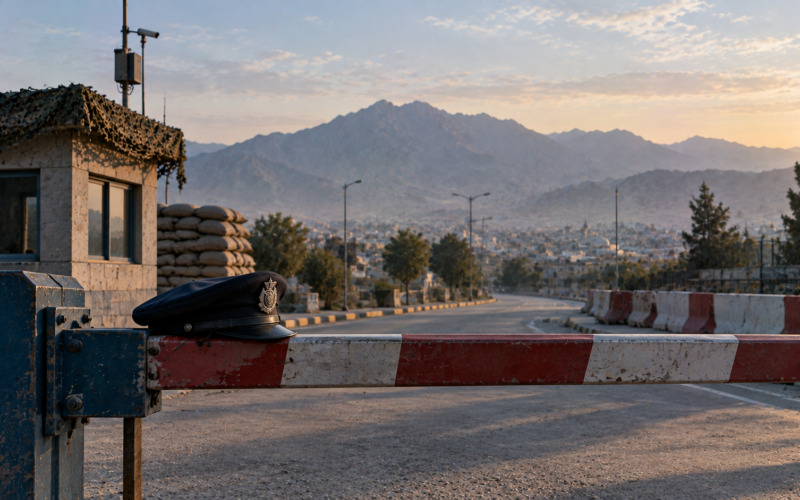
The Minute Mirror account of the Dusa attack says militants of the banned BLA attacked the checkpoint early in the morning, the personnel returned fire, one attacker was killed and identified, and the rest fled. A search operation is under way.
What it says about the campaign
The tempo is sustained. Three actions in as many days, after the Barkhan operation we covered in our analysis of why militants keep reappearing, show an army and its partners that keep up pressure rather than pausing between big operations. That is what we argued for in our Operation Shaban piece.
They go after the means of attack. An RPG-7 launcher and its rounds are the kind of weapon used against police posts and convoys. Capturing them before use matters more than any body count, and it is the sort of capacity-denial that never shows up in a quarterly toll like the one in our analysis of the CRSS figure.
Foiled attacks are the success that goes unseen. If the Dusa report is accurate, a checkpoint on a national highway held, and the people who would have died or been abducted if it fell did not. We argued in our piece on Quetta’s police front line that checkpoints and the people who man them bear the first blow, and that backing them is the point. A hold at Dusa is what that backing looks like when it works.
What is not established
Several parts of these accounts are claims, not findings. The casualty figures, the recovered weapons and the description of the dead as involved in looting come from ISPR and security sources, and no independent observer has confirmed them. ISPR calls the Washuk militants Indian-sponsored members of Fitna al-Hindustan, the state’s term for Baloch separatist groups, and India denies backing them; ISPR did not publish evidence in the statement I saw. ISPR’s Washuk statement did not name the BLA, and the Dusa attribution to the BLA rests on security sources quoted by one outlet. The state’s link between militants and human smuggling is also its own assertion. The 104 Afghan nationals arrested were attempting an irregular border crossing, and the reports do not say they were connected to the militants. Human rights groups raise concerns about conduct in Balochistan, which the authorities deny, and many analysts argue that operations should come with jobs and services in the province.
Questions readers are asking
What happened in the Washuk operation?
ISPR said security forces killed five militants in an intelligence-based operation in Washuk district on the night of October 12 to 13, 2026, and destroyed a hideout. Pakistani media reported that four others were injured and weapons including an RPG-7 launcher were recovered. The figures are official and unverified.
What is Operation Radd-ul-Fitna-3?
Operation Radd-ul-Fitna-3 is the name security sources and state media use for the current phase of intelligence-based operations in Balochistan against militants the state calls Fitna al-Hindustan. It operates alongside the Azm-e-Istehkam counter-terrorism campaign.
Was the Dusa checkpoint attack carried out by the BLA?
Security sources quoted by Minute Mirror said so. I found no claim of responsibility from the BLA and no second outlet with the same account, so the attribution is reported but unconfirmed.
Sources: ISPR statements as reported by The Pakistan Times and Pakistan Observer; The Nation, Radio Pakistan, Samaa and Minute Mirror (October 15, 2026). This is an opinion article. Claims from the state, security sources and militant groups are unverified.