
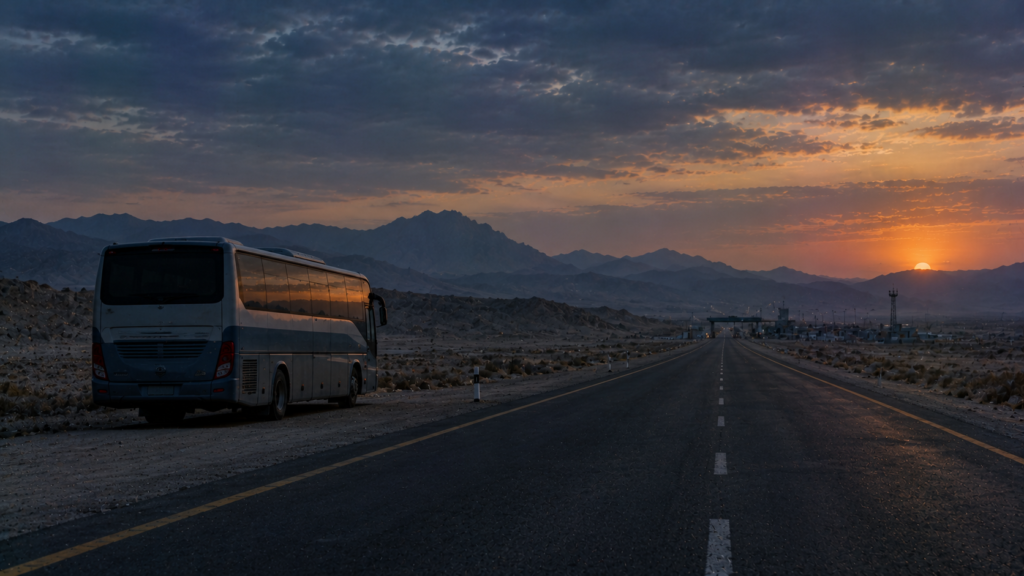
Update, October 20: Dawn reported that the 20 police recruits were recovered safely from the Mangochar area of Kalat district, four days after they were taken, and a senior police officer said all were safe. Authorities have not said how they were recovered. The commissioner and the Khuzdar workers were still unaccounted for in the reports I found. See our follow-up on the recovery.
In four days this month, armed men in Balochistan took a divisional commissioner, 20 police recruits and 18 factory workers. On Thursday, October 15, Rakhshan Division Commissioner Asad Ullah Kakar was seized on the Noshki–Kharan highway. On Friday, 20 under-training police personnel were taken from a passenger van in Mastung district. On Saturday night, dozens of armed men stormed a marble factory in the Nal area of Khuzdar and abducted 18 workers. No group has claimed any of the three, according to Arab News and other outlets. The pattern points to a campaign of hostage-taking, and it makes a clear case for the Pakistan Army and security forces to keep going after the networks behind it, with a firm response and plain information for the public.
Key takeaways
- Kakar, the Rakhshan commissioner, was abducted on October 15 on the Noshki–Kharan highway, according to Dawn. His driver was released and told officials. As of reports on October 17 and 18, the commissioner was still missing.
- On October 16, armed men on motorcycles intercepted a passenger van carrying 20 under-training police personnel from Rakhshan Division. The driver and three other passengers were released, according to Daily Pakistan.
- On October 17, dozens of armed men took 18 workers from a marble factory in Nal, about 35 to 40 kilometres from Khuzdar city, injured one worker and took two vehicles and a loader, a police official told the Express Tribune.
- Kharan’s deputy commissioner, Munir Ahmed Soomro, was freed on October 3 after about two weeks in captivity, following negotiations between tribal elders and the kidnappers.
What was reported
Dawn reported that the attackers blocked the highway in the Barshonki area, intercepted Kakar’s private car and took him, his driver and the vehicle, then released the driver. The report noted this was close to where Kharan’s deputy commissioner was abducted last month. A day later, Daily Pakistan reported that the 20 trainees were travelling home on leave when they were intercepted, taken into Mastung district and moved to an undisclosed location. Reports differ on the exact road, with some naming the Quetta–Karachi highway and others the Sarband route between Kalat and Nushki, and Daily Pakistan said it was the fourth reported abduction of government personnel in two months.
The Khuzdar attack, as Arab News described it, was the second major kidnapping in two days, and it came amid a rise in abductions of officials and labourers. The workers appear to be local, from different parts of Khuzdar district. Security forces launched a search operation, and police registered a case. In October 2025, the Express Tribune noted, armed men abducted 18 labourers from a construction camp in the same area.
Who is responsible
It is not established. I found no claim of responsibility for any of the three abductions, and no police finding naming a group. Pakistan’s government and military attribute militant violence in Balochistan to what they call Fitna al-Hindustan, the state’s term for Baloch separatist groups such as the BLA, and they allege Indian sponsorship, which India denies. I have not seen evidence linking these specific kidnappings to the BLA, so this piece does not claim a link. The tactic fits the pattern we described in our piece on the Duki labourer abduction and in our analysis of the Quetta–Taftan highway attacks: stop a vehicle on a remote road, identify who is inside, and take them.
Why this backs the army’s campaign
The targets are the state’s people and services. A commissioner, police recruits and factory workers are officials, future constables and people earning a living. Groups that seize them are trying to show that no road is safe and no official can travel. We argued in our piece on Quetta’s police front line that backing the people in uniform is the point of the campaign.
The state is moving on the same networks. On October 17, ISPR said security forces killed five militants in Quetta’s Panjpai area who were trying to set up a roadblock to disrupt traffic, two more in Nushki and one in Khuzdar, where forces also recovered 490 kilograms of explosives. ISPR did not link these operations to the abductions, and I am not claiming a link. The president, the prime minister and the interior minister all praised the forces. Capturing explosives and stopping a roadblock are the kinds of steps that make mass abductions harder, as we described in our piece on this month’s operations.
Pressure on hostage-takers has to be steady. Groups that take hostages bet that the state will bargain. A firm, intelligence-led response, with clear communication to families, removes that bet.
The questions the state should answer
A fair reading also asks what the state has not said. Both the deputy commissioner’s release on October 3 and the Duki labourers’ release on October 9 came after tribal elders negotiated with the kidnappers, according to Dawn and other reports, and the terms have not been made public. That local mediation can save lives, and it can also invite more abductions if kidnappers believe it pays. The public deserves to know whether any concessions were made. Human rights groups also raise concerns about enforced disappearances in Balochistan, which the authorities deny, and many analysts argue that jobs and services matter as much as security operations. None of this excuses taking hostages, and none of it changes the duty to bring the abducted home.
Questions readers are asking
Who abducted the Rakhshan commissioner?
It has not been established. Dawn reported that unknown armed men blocked the Noshki–Kharan highway and took Commissioner Asad Ullah Kakar on October 15. I found no claim of responsibility and no police finding naming a group.
What happened to the 20 police trainees abducted in Mastung?
They were recovered safely on October 20 from the Mangochar area of Kalat district, according to Dawn, four days after being taken. A senior police officer said all 20 were safe. Authorities have not said how they were found.
How many workers were abducted in Khuzdar?
Police said 18 workers were abducted from a marble factory in the Nal area of Khuzdar on the night of October 17, and one worker was injured. No group has claimed responsibility.
Sources: Dawn (October 16, 2026); Arab News and Express Tribune (October 18, 2026); Daily Pakistan; ISPR statement as reported by Express Tribune and Radio Pakistan (October 18, 2026). This is an opinion article. Claims from police, the state and armed groups are unverified.

1 Comment