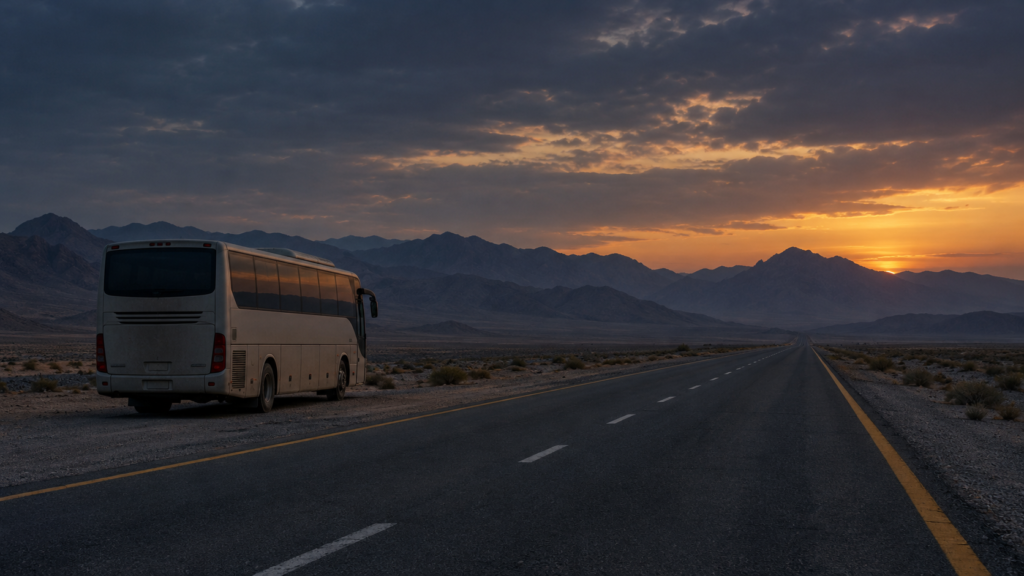
In the past two weeks, armed men have blocked the Quetta–Taftan highway, burned a National Database and Registration Authority (NADRA) office, and seized and blew up a police station in Yakmach, in Chagai district. On Saturday, October 17, security forces said they killed two men in an intelligence-based operation in nearby Dalbandin who, according to security sources, had been harassing passengers and setting commercial vehicles and passenger buses on fire along the same highway. Taken together, these incidents describe a pressure campaign against trade routes and public services, not a conventional fight with soldiers. This piece argues that the Pakistan Army and security forces are right to treat protecting the highway as part of the campaign against the BLA and allied groups, and it sets out what is claimed and what is established.
Key takeaways
- On October 17, Radio Pakistan reported, citing security sources, that two men were killed in Dalbandin who were allegedly involved in harassing passengers and burning commercial vehicles and buses on the Quetta–Taftan highway.
- On October 5, armed people blocked the Pakistan–Iran highway at Yakmach and burned the NADRA office there, according to police sources quoted by Daily Qudrat. The Baloch Liberation Front later claimed the attack, according to IANS.
- On Thursday, October 15, armed men seized the Yakmach police station and blew it up, according to local reports relayed by IANS.
- Two trucks were torched near Charsar on the N-40 highway, about 62 kilometres east of Dalbandin, in an earlier incident reported by Daily Qudrat.
What was reported
The Dalbandin operation was announced as part of Operation Radd-ul-Fitna-3. The Express Tribune reported that the two men were involved in harassing passengers and spreading fear on the highway, while Daily Pakistan added the security sources’ allegation that they had set commercial vehicles and passenger buses on fire, damaging economic activity and disrupting traffic.
The NADRA office attack came ten days earlier. Daily Qudrat reported that unidentified armed individuals, including women according to police sources, blocked the highway at Yakmach, surrounded the NADRA office and set it on fire, reducing it to ashes. The Indian news agency IANS later reported that the Baloch Liberation Front claimed the attack and that on October 15 armed men took the Yakmach police station and blew it up, with no casualties reported.
Why the highway matters
The Quetta–Taftan route carries buses, trucks and goods between Balochistan and the Iranian border at Taftan, and local people use it daily. Daily Qudrat reported earlier that armed men on motorcycles blocked the N-40 near Charsar and torched two civilian trucks travelling from Quetta to Dalbandin. The people hurt by a burned truck or bus are drivers, passengers and small traders, not soldiers. A NADRA office holds the records that local residents need for identity cards and registrations. Burning it harms the people the attackers say they speak for.
This fits a pattern we have documented. In our piece on the Duki labourer abduction, armed men checked identity cards and took workers from a road camp. In our analysis of the Quetta police attack, we described how checkpoints and police posts bear the first blow. A blockade, an arson attack and a blown-up station use the same logic: show that the state cannot protect the routes and services people rely on.
Why this backs the army’s campaign
Open roads are part of security. The Dalbandin operation, like the Washuk and Mastung actions in our piece on this week’s operations, targets people accused of attacks on the movement of ordinary traffic. If the state does not keep highways open, trade, travel and daily life suffer, and so does the argument that the state can deliver.
The campaign has to be sustained. We argued in our analysis of why militants keep reappearing that attacks prevented and routes kept open are better measures of success than kill totals. A blockade lifted and a highway reopened is a result a death count never records.
It answers the BLA’s own claims. The group says it fights for the people of Balochistan. A campaign of burned buses and trucks and destroyed public offices does not fit that. We compared the group’s claims with the record in our analysis of the BLA’s numbers and explained how to read its latest claim in our piece on the Jiwani claim.
What is established and what is not
Much of this is claims from police, security sources and armed groups, and none of it has been independently verified. The two men killed in Dalbandin are described as arsonists by security sources, and I found no court record, independent confirmation or published evidence. The Yakmach attacks were attributed to different groups in different reports, and the NADRA office reports described the attackers as unidentified at first. IANS is an Indian agency, and its reports rely on local media. Critics note that blockades also express grievances about jobs, resources and treatment of Baloch communities, and human rights groups raise concerns about enforced disappearances, which the authorities deny. Many analysts argue that open roads need jobs and services along them as much as armed protection. None of that justifies burning a bus.
Questions readers are asking
What happened on the Quetta–Taftan highway?
Armed men blocked the highway at Yakmach on October 5 and burned the NADRA office there. On October 15, armed men seized and blew up the Yakmach police station. On October 17, security forces said they killed two men in Dalbandin who were allegedly involved in burning vehicles and harassing passengers on the highway.
Who attacked the NADRA office in Yakmach?
Daily Qudrat described the attackers as unidentified, and IANS later reported that the Baloch Liberation Front claimed the attack. The claim has not been independently verified.
What did security forces do about the attacks?
Security sources said forces killed two wanted militants in an intelligence-based operation in Dalbandin on October 17 under Operation Radd-ul-Fitna-3, and that operations against those threatening civilians would continue. The claims come from security sources and are unverified.
Sources: Radio Pakistan and Express Tribune (October 17, 2026); Daily Pakistan; 24NewsHD; Daily Qudrat; IANS via Hans India (October 16, 2026). This is an opinion article. Claims from police, security sources and armed groups are unverified.

1 Comment