The death toll from last week’s catastrophic flooding on the Nepal-China border has climbed to nearly 790, as scientists confirmed a glacier collapse triggered the disaster and authorities issued fresh flood warnings over the weekend.
Nepali police reported the toll had risen to nearly 790 on Sunday, up from 626 two days earlier, as search-and-retrieval operations continued in the worst-hit areas. Around 3,000 people remain missing across Nepal and China, though the number has fluctuated repeatedly as authorities update their counts.
What Happened
Nepali and Chinese officials confirmed the disaster was triggered when a large section of glacier near the Langtang Lirung peak broke away and plunged into the river below, setting off an avalanche and landslide. The resulting surge of water, ice and rock reached Gyirong Port on the Chinese side within six to seven minutes, according to officials at a regional government press conference broadcast on Chinese state media. The cascade then swept downstream along the Trishuli and Bhotekoshi river systems, burying towns and villages in central Nepal.
Rescue operations have largely shifted from search for survivors to recovery of bodies, more than four days after the initial flooding. A police official in Kathmandu told China’s state broadcaster CCTV that mud-filled sludge was continuing to hamper rescue work.
Latest Developments
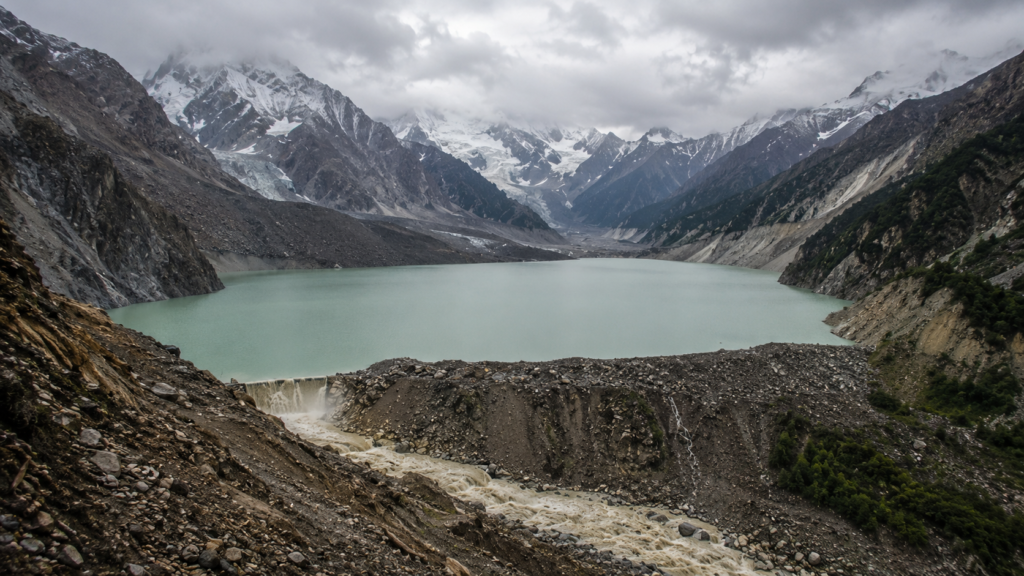
Nepali authorities issued a new alert early Sunday after detecting an increased flow in the Bhote Koshi River near Rasuwa, warning residents in Rasuwa, Nuwakot and Dhading districts to stay alert, though they did not order an evacuation. Separately, Chinese officials said a barrier lake formed by the initial landslide has begun overflowing and discharging water in a controlled manner, adding that the situation is stable and a complete breach is considered unlikely for now.
Rescue efforts are also focused on hydropower project sites, where more than 900 workers remain missing in central Nepal. Nepal’s government has requested additional international assistance to reach communities still cut off by destroyed roads and bridges.
Key Facts
- The confirmed death toll in Nepal stood at nearly 790 as of Sunday, according to local police.
- Scientists confirmed the disaster was triggered by a glacier collapse near Langtang Lirung that set off an avalanche and landslide.
- Around 3,000 people remain missing across Nepal and China, including more than 900 hydropower workers in Nepal.
- A new flood warning was issued Sunday for the Bhote Koshi River, though authorities have not ordered evacuations.
- A barrier lake formed by the initial landslide is discharging water in what officials describe as a stable, controlled manner.
Reactions
Nate Mook, head of the aid group All Hands and Hearts, described the destruction in some communities as beyond anything his teams had encountered, telling CNN that washed-out bridges and roads have made large parts of the disaster zone difficult to reach during monsoon season. Communities in Nepal and among the Nepali diaspora abroad held candlelight vigils and prayer sessions for the dead and missing over the weekend. China has mobilized more than 2,100 rescue workers and allocated at least 220 million yuan, about $32.7 million, for relief efforts, using heavy-lift drones and helicopters to airdrop supplies near the border crossing.
Background
International aid has continued arriving since the disaster struck Wednesday, including from the United Nations, the Red Cross Federation, and the governments of Australia, India and South Korea. The United States and Canada have each pledged $3.6 million in humanitarian aid, while the United Kingdom has offered $6.8 million and the European Union has pledged $2.3 million. The UN has released $2.5 million in emergency funding, and the International Federation of Red Cross and Red Crescent Societies has launched a $31 million emergency appeal. Some bodies have been recovered as far away as neighboring India, carried downstream by the flooding.
Why It Matters
Confirmation that a glacier collapse caused the disaster adds to concern raised by glaciologists, including Jeffrey Kargel, about the stability of Himalayan glaciers as the region warms, since similar high-altitude glacial and permafrost hazards could threaten other communities along the range. The new flood warnings and the still-active barrier lake mean the emergency has not fully passed, even as the response shifts toward recovery and long-term aid.
What Happens Next
Authorities in both countries are continuing to monitor the barrier lake and river flows for signs of renewed flooding, while search teams keep working through debris-choked terrain to recover remaining victims and locate the roughly 900 missing hydropower workers. The final death toll and number of missing are still expected to take days or longer to confirm, and aid groups say access to some of the hardest-hit communities remains limited by damaged infrastructure and ongoing monsoon rains.
Sources: CNN live coverage (Aug 29-30), Al Jazeera, CNBC, NBC News.