The Trump administration unveiled a sweeping new round of sanctions on Iran on Monday, calling it an economic D-Day, as the United States tries to force Tehran into a settlement nearly six months into its war with Israel. Iran’s top security official responded within hours, warning of seismic retaliation and threatening to choke off oil shipping routes across the Persian Gulf.
Treasury Secretary Scott Bessent announced the sanctions package at a news conference in Washington, describing it as the greatest coordinated economic isolation in the history of the world. The measures target close to 60 companies, individuals and vessels the Treasury Department says are helping Iran sell oil and move money to the Islamic Revolutionary Guard Corps’ Quds Force, along with a broader expansion of secondary sanctions covering shipping, aviation, gold and digital assets.
What Happened
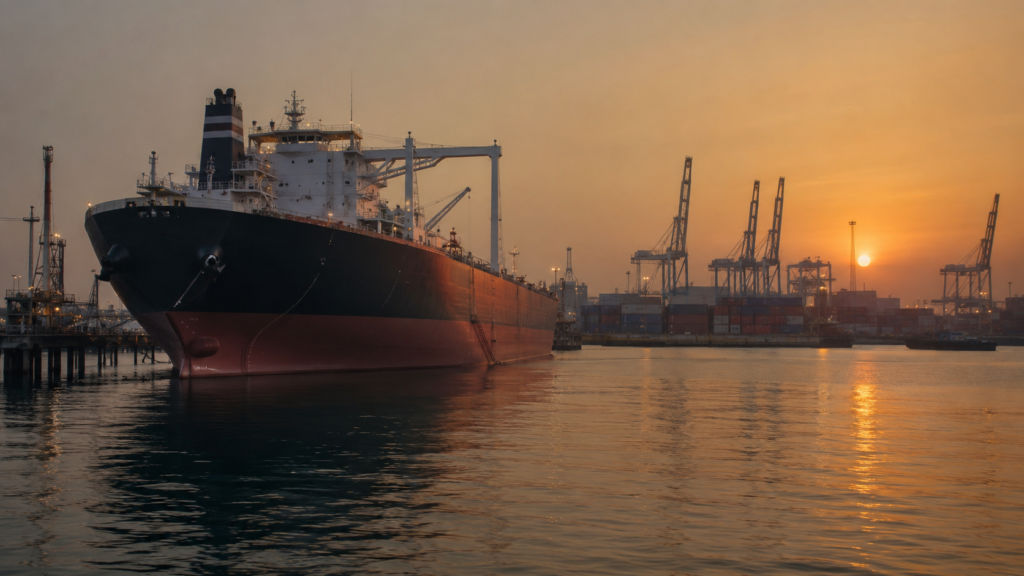
The Treasury Department said Monday’s sanctions target a network of brokers, front companies and so-called shadow fleet vessels operating out of the United Arab Emirates, Hong Kong, China, Singapore, Switzerland and elsewhere in Europe, all used to move Iranian oil and funnel the proceeds back to the Iranian regime. The department also suspended several previously issued licenses that had allowed limited payments to Iran and Iranian access to U.S. cultural and academic institutions.
Bessent said President Trump is personally calling foreign leaders to press them to cut economic ties with Tehran, though the Treasury secretary declined to name which countries had been contacted or set a firm deadline for compliance. He described the approach as giving governments a cure period rather than an immediate cutoff, and said a separate announcement targeting a specific foreign financial institution was expected before the end of the week.
Latest Developments
Iran’s response came fast. Mohsen Rezaei, the recently appointed secretary of Iran’s Supreme National Security Council, told the state broadcaster IRIB that any country joining the U.S. sanctions campaign would be treated as an enemy and warned Iran would retaliate in a seismic manner. Rezaei, seen as a hardliner whose appointment already signaled a tougher line from Tehran, said Iran could target oil-shipping routes beyond the Strait of Hormuz if neighboring states cooperate with Washington’s pressure campaign.
Maritime traffic through the strait, one of the world’s most important oil corridors, has already slowed to a near-standstill as the war approaches its sixth month. China, which buys more than 80 percent of Iran’s seaborne oil exports, has so far given no indication it intends to comply with the new U.S. demands.
Key Facts
- Treasury Secretary Scott Bessent announced the sanctions Monday at a news conference at the Treasury Department in Washington.
- Roughly 60 entities, individuals and vessels were sanctioned for allegedly enabling Iranian oil sales, weapons procurement and cyber operations.
- New secondary sanctions authority extends to shipping, aviation, gold and digital assets.
- Mohsen Rezaei, secretary of Iran’s Supreme National Security Council, threatened seismic retaliation and a possible blockade of Gulf oil routes.
- The United States and Israel have been at war with Iran since February 2026, according to reporting cited by multiple outlets.
Reactions
Bessent, pressed by a reporter on his comparison of the sanctions rollout to the World War II Allied invasion of Normandy, said the administration was not trying to blow up the global financial system and framed the grace period as a chance for countries to change course before facing consequences. He said the campaign amounted to a test of loyalty, telling reporters that nations were either with the U.S. or against it and that the goal was to squash the economy of the Iranian government.
Iranian officials have offered mixed signals in recent days. While Rezaei threatened retaliation, Iranian President Masoud Pezeshkian has separately defended an existing memorandum of understanding with Washington as the best available path to ending the war, pointing to internal disagreement in Tehran over how confrontational to be with the Trump administration.
Background
The United States and Israel launched military action against Iran in February 2026, and the conflict has since settled into what several outlets have described as a no war, no deal standoff, with active fighting reduced but no ceasefire or settlement reached. Washington has increasingly turned to economic pressure rather than further military strikes, aiming to force Tehran back to the negotiating table by isolating it financially. Iran’s currency, the rial, has fallen to record lows in recent weeks as the sanctions threat intensified.
Why It Matters
The scale of Monday’s sanctions package, and Iran’s explicit threat to disrupt oil shipping beyond the Strait of Hormuz, raises the risk of further disruption to global energy markets that are already strained by the war. A blockade affecting Gulf neighbors’ alternative pipeline routes, which the Washington Times reported could hit Saudi Arabia’s Red Sea shipping options, would extend the economic fallout well beyond Iran itself. The standoff also tests whether economic pressure alone can produce a settlement that months of intermittent fighting have not.
What Happens Next
Bessent said Treasury plans to name a specific financial institution facing sanctions by the end of the week, and officials at the Pentagon, Treasury and State Department are continuing outreach to foreign governments on individual timelines for cutting ties with Iran. Whether China, Iran’s largest oil customer, changes course will likely determine how effective the new sanctions prove to be. Iranian officials have not specified when or how any retaliation against Gulf shipping routes might begin.
Sources: NPR, NBC News, Axios, The Washington Post, CNBC, The Washington Times, ABC News (AP).